

If you love unusual bread recipes, this one is definitely worth trying. This black lentil flatbread is made with just black lentils, water, and salt, yet with the right technique it can puff up beautifully and form a little pocket inside. I’ve received a lot of reaction videos to this type of recipe because getting the flatbread to inflate can be surprisingly tricky. The key is using a good non-stick pan, medium heat, and flipping it very frequently while it cooks. It takes a little patience and practice, but watching it suddenly puff up is so satisfying. I’ve also made several other versions using oats, chia, red lentils, and flour, so check those out too — many of them have gone viral on my channels.

Black Lentil Flatbread
Description
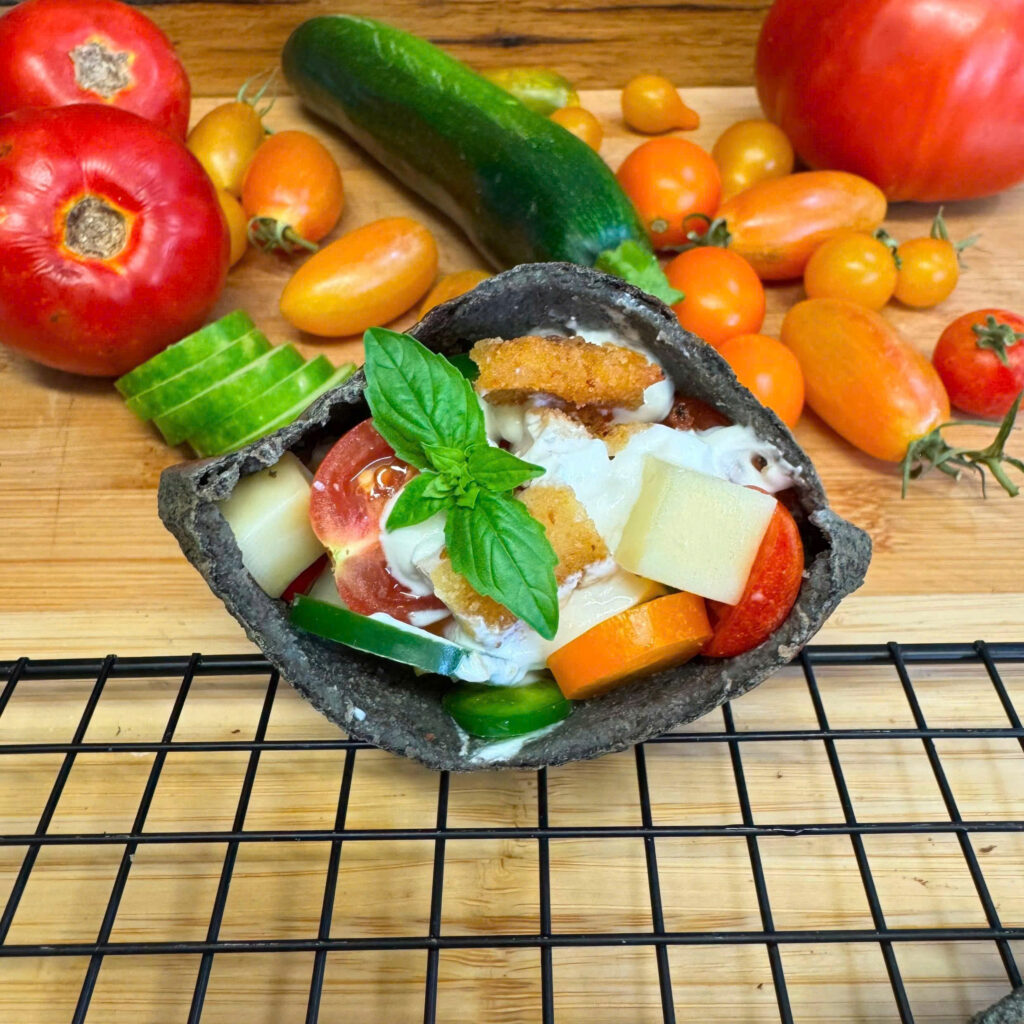
This simple black lentil flatbread is made with soaked black lentils, water, and salt. The batter is cooked in a non-stick pan and frequently flipped until steam builds inside and the flatbread puffs up, creating a light pocket perfect for filling with your favorite ingredients.
Ingredients
Instructions
-
Soak the black lentils for at least 2 hours, preferably overnight.
-
Drain and rinse the lentils well.
-
Add the lentils, ½ cup water, and salt to a blender.
-
Blend until you have a completely smooth batter.
-
Heat a good-quality non-stick pan over medium heat. Do not add oil.
-
Pour the batter into the pan and spread it into a flatbread.
-
Cook until the bottom is set and lightly browned.
-
Begin flipping the flatbread every 10 seconds or so.
-
Continue cooking and flipping frequently until the surface dries and the flatbread starts to puff up.
-
Watch the heat carefully so it doesn't burn.
-
Once cooked and inflated, remove from the pan.
-
Use kitchen scissors to cut the flatbread open and create a pocket.
-
Fill with your favorite ingredients and serve immediately.
Nutrition Facts
Servings 2
- Količina po porciji
- Calories 170kcal
- % Daily Value *
- Total Fat 1g2%
- Total Carbohydrate 30g10%
- Dietary Fiber 8g32%
- Protein 12g24%
* Percent Daily Values are based on a 2,000 calorie diet. Your daily value may be higher or lower depending on your calorie needs.
Note
🔥 The secret to the balloon effect
The most important part of this recipe is the flipping technique. Don't simply leave the flatbread cooking on one side for several minutes. Once the bottom has set, start flipping it frequently — approximately every 10 seconds — over medium heat.
This helps the surface gradually dry out while steam builds inside. Eventually, the steam can cause the flatbread to puff up and form a beautiful pocket.
Be patient — it can take practice
This is one of those recipes that looks easy but can take a little practice. I've received quite a few reaction videos from people trying to recreate my balloon flatbreads, and getting them to inflate is often the most challenging part.
Don't get discouraged if your first one doesn't puff perfectly. The pan, heat, thickness of the batter, moisture level, and flipping technique can all make a difference.
Use a good non-stick pan
A good non-stick pan is very important for this recipe. You want to be able to flip the flatbread repeatedly without it sticking or tearing. I don't recommend adding oil because the batter is designed to cook directly on the pan.
Don't use high heat
Keep the heat around medium. If the pan is too hot, the outside can brown or burn before enough steam has built up inside.
Make it thin
Try to spread the batter into an even, relatively thin layer. A flatbread that is too thick may be more difficult to cook through and inflate.
Try my other balloon flatbreads
This is just one version of my balloon flatbread recipes. I've experimented with oats, chia seeds, red lentils, and flour, and several versions have gone viral across my social media channels. If you enjoy this one, definitely try the others too — each base behaves a little differently.