

Could you make homemade bread with just one main ingredient?
This simple buckwheat bread is made with whole buckwheat groats, water, and a little salt, with no wheat flour, yeast, or complicated dough. The secret is in the soaking and resting time: after the buckwheat is blended with water, the mixture rests for 24 hours before baking, allowing it to naturally ferment and develop a deliciously deep flavor and a soft, slightly chewy texture. It’s a fascinating recipe if you love experimenting in the kitchen, and a great way to turn one humble ingredient into a completely different kind of homemade bread.
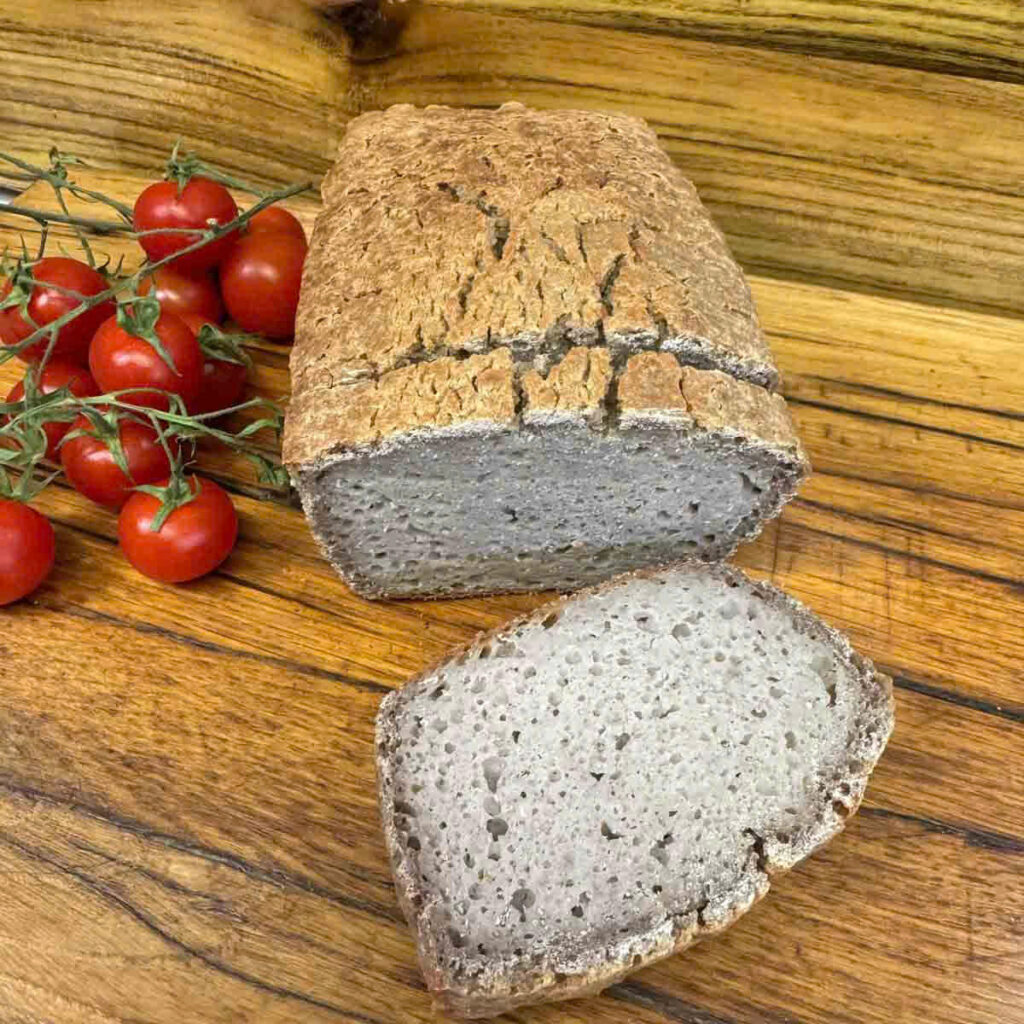

Buckwheat Bread
Description
This simple buckwheat bread is made with whole buckwheat groats, water, and salt. The buckwheat is soaked overnight, blended with water, and left to rest for 24 hours before baking. The result is a rustic homemade loaf with a pleasantly dense, slightly chewy texture and a naturally nutty flavor.
Ingredients
Instructions
-
Place the buckwheat groats in a large bowl and cover with water.
-
Leave to soak overnight.
-
The next day, drain and rinse the buckwheat well.
-
Add the soaked buckwheat to a blender with 250 ml water.
-
Add salt to taste.
-
Blend until you have a smooth mixture slightly thicker than pancake batter.
-
Transfer the mixture to a bowl and cover.
-
Leave it to rest at room temperature for approximately 24 hours.
-
Preheat the oven to 180°C (350°F).
-
Pour the fermented mixture into a lined loaf pan.
-
Bake for approximately 60 minutes, or longer if needed.
-
Check the center with a toothpick. If it comes out dry or mostly clean, the bread is ready.
-
Allow the bread to cool before slicing.
Nutrition Facts
Servings 10
- Količina po porciji
- Calories 180kcal
- % Daily Value *
- Total Fat 2g4%
- Total Carbohydrate 35g12%
- Dietary Fiber 4g16%
- Protein 6g12%
* Percent Daily Values are based on a 2,000 calorie diet. Your daily value may be higher or lower depending on your calorie needs.
Note
🌱 Why is this bread so interesting?
This might be one of the most surprising breads you'll make because there is no traditional flour, yeast, or kneading involved. The main ingredient is simply whole buckwheat groats.
The really interesting part is what happens after blending. The mixture rests for around 24 hours, allowing it to naturally ferment before baking. This gives the bread its characteristic flavor and texture without adding commercial yeast.
🍞 Is this really a 1-ingredient bread?
The main ingredient is buckwheat, while water is needed to soak and blend it and salt is added for flavor. So when people call it "1-ingredient bread," they mean that buckwheat is the only main food ingredient.
🌾 Is buckwheat gluten-free?
Yes. Despite its name, buckwheat is naturally gluten-free and is not related to wheat. If you need to strictly avoid gluten, choose certified gluten-free buckwheat and make sure your equipment and ingredients have not been exposed to gluten.
🫧 Why does the mixture rest for 24 hours?
The long resting period allows the blended buckwheat mixture to naturally ferment. This is what makes this recipe different from simply blending buckwheat and baking it immediately. The fermentation contributes to the bread's flavor, aroma, and texture.
⏰ Don't skip the resting time
The 24-hour resting period is an important part of this recipe. It may seem long, but most of the time is completely hands-off. Simply cover the mixture and let it rest while the natural fermentation takes place.
💡 The batter should be thick
After blending, the mixture should be slightly thicker than pancake batter. If it looks extremely thick, you can add a small amount of water. Avoid adding too much, as a very watery mixture can result in a denser or wetter loaf.
🔥 Baking time may vary
Every oven is different, and the exact baking time depends on the size and shape of your loaf pan. Start checking around the 60-minute mark. If the center is still wet, continue baking until a toothpick inserted into the middle comes out dry or mostly clean.
🌰 Add your own flavors
The basic recipe is intentionally simple, but you can experiment with the flavor. Try adding sunflower seeds, pumpkin seeds, sesame seeds, herbs, garlic, or spices before baking.